

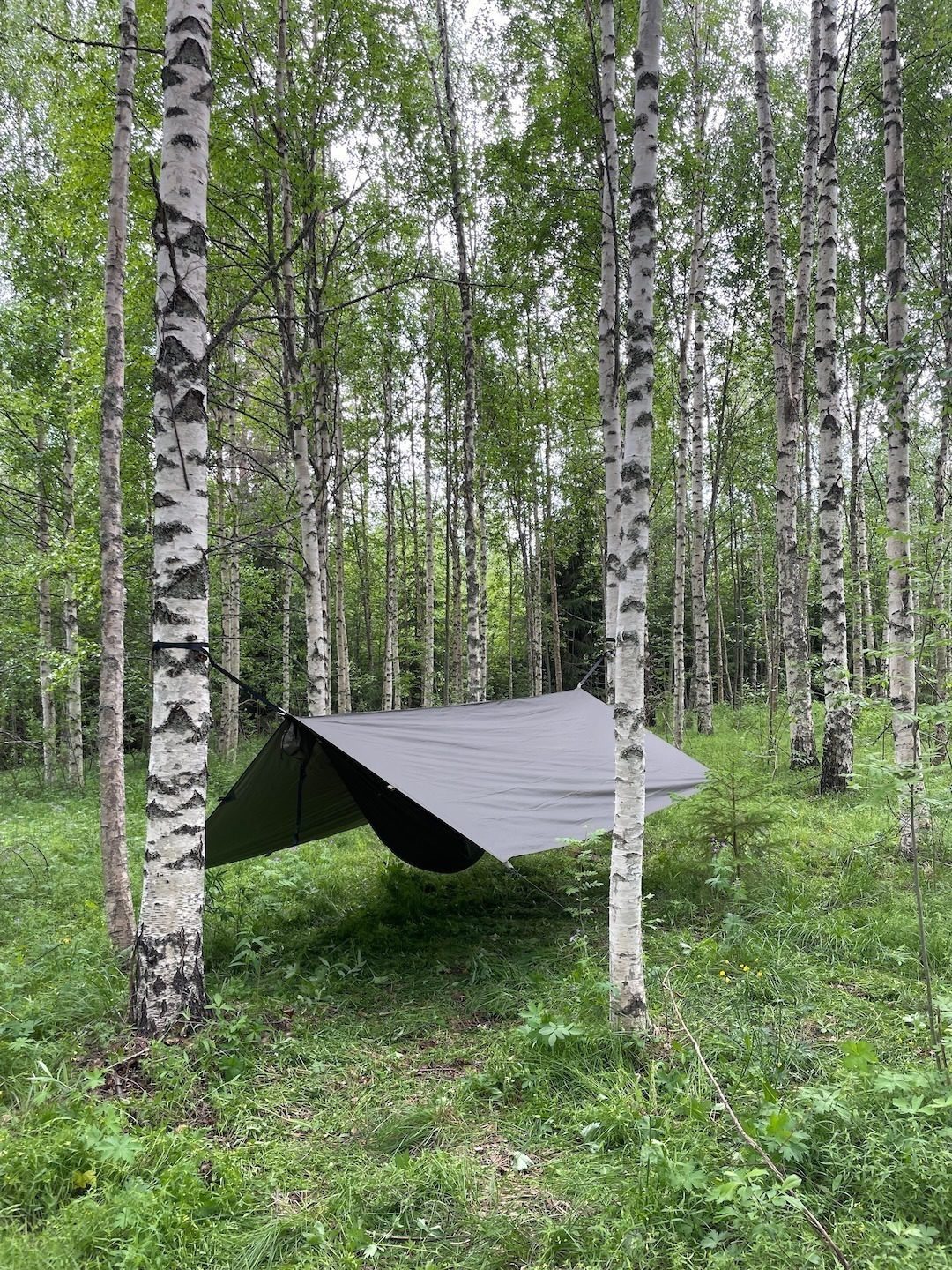
Winter hammock camping in Scandinavia throws unique challenges your way: relentless winds whipping through fjords, heavy snow loads in forested valleys, and that ever-present humidity that turns every breath into potential condensation. A tarp isn’t just rain protection—it’s your windbreak, heat trapper, and first line of defense against the elements. Pitch it wrong or choose poorly, and you’ll spend the night battling drafts; get it right, and it creates a cozy microclimate above the frozen ground.
Unlike summer tarps focused on minimalism, winter models prioritize coverage and durability to handle blizzards and sub-zero gusts. This guide, informed by hammock community insights and Nordic-specific tips, breaks down key factors to help you select a tarp that turns “survival mode” into serene hangs. We’ll focus on what matters in our cold, humid climate, so you invest wisely.
1) Size and Coverage: Go Big for Wind and Snow Protection
In Scandinavia’s harsh winters, bigger is better—small tarps leave you exposed to sideways snow and wind-driven chill.
Aim for tarps at least 3×4 meters (or larger) to fully enclose your hammock setup, creating a “porch” for gear storage and cooking. This extra surface area blocks wind more effectively and traps rising body heat, potentially raising internal temps by 5-10°C. The Jord Tarp offers generous dimensions, shielding against sudden Nordic blizzards while allowing ventilation to combat humidity.
Avoid ultralight “minimal” tarps (under 3m wide)—they work in mild weather but fail when snow accumulates or winds howl. Full coverage means doors or panels that close off ends, turning your setup into a windproof cocoon.
2) Material and Durability: Waterproofing That Handles Humidity and Cold
Scandinavian humidity demands materials that resist sagging under snow and minimize internal condensation.
Silnylon (silicone-coated nylon) is lightweight and packable, with high hydrostatic head ratings (1,500mm+) for waterproofing, but it can stretch in cold, wet conditions. Polyurethane (PU)-coated fabrics offer better durability and less sag, ideal for heavy snow loads—look for 20D or thicker ripstop for tear resistance. The Jord Tarp uses robust, water-repellent ripstop, standing up to Nordic storms without excess weight.
For extreme cold, consider reflective linings to bounce heat back. Avoid cheap poly tarps—they’re heavy, prone to cracking in sub-zero temps, and trap moisture like a sauna.
3) Shape and Pitching Options: Versatility for Variable Weather
Tarp shape affects wind deflection and setup flexibility in Scandinavia’s unpredictable terrain.
Hexagonal (hex) tarps provide excellent coverage with fewer guylines, deflecting wind efficiently in open areas—great for fjord hangs. Rectangular tarps offer more pitching modes (A-frame, diamond, low storm pitch), allowing adjustments for heavy snow or gusts. In winter, pitch low (1-1.5m above hammock) to trap heat and block wind, but ensure ventilation to prevent condensation buildup.
Doors or end panels are a must for foul weather, enclosing your space against horizontal rain. The Jord Tarp’s design supports multiple configurations, making it adaptable for dense forests or exposed ridges.
4) Weight vs. Protection: Balancing Portability and Winter Toughness
Lightweight tarps shine on hikes, but winter demands a trade-off for robustness.
Ultralight options (under 500g) suit 3-season use but may tear under snow weight; opt for 600-900g models with reinforced tie-outs for durability. In Scandinavia, where pack weight competes with warmth needs, choose tarps that compress small yet hold up—silnylon packs tiniest, but PU adds longevity.
If car camping, heavier tarps (1kg+) with extra features like guyline tensioners provide ultimate protection without portability concerns.
5) Integration with Your Hammock System: Seamless Fit for Gap-Free Warmth
A tarp must complement your hammock, underquilt, and topquilt to eliminate cold gaps.
Ensure ridgeline compatibility—continuous ridgelines keep tarps taut over asymmetrical hammocks like the Jord Hammock ([https://jordhammock.com/products/jord-hammock]). Match coverage to your setup’s footprint; too small, and wind sneaks under. For insulation synergy, pair with the Jord Underquilt and Jord Topquilt—the tarp shields them from snow, preserving loft.
Test setups in wind; adjustable guylines (at least 12 tie-outs) allow fine-tuning for stormy nights.
6) Additional Features: Tie-Outs, Reflective Elements, and Ease of Use
Look beyond basics for features that enhance winter performance.
Reinforced tie-outs with guyline loops handle high winds; reflective guylines improve visibility in low-light Nordic winters. Doors with zippers or toggles block snow ingress, and a catenary cut (curved edges) reduces flapping noise.
For humidity management, breathable fabrics or vent options prevent ice buildup inside. The Jord Tarp includes these, with easy deployment for quick pitches in freezing rain.
7) Price, Durability, and Long-Term Value
Quality tarps range €100-300—invest in ones with warranties and proven fabrics.
Durability pays off: Thicker denier (20D+) resists punctures from branches or ice. Value comes from versatility— a 4-season tarp like the Jord saves money over seasonal swaps.
Budget picks work for starters, but premium materials endure Scandinavia’s abuse, offering better ROI.
The Scandinavian Winter Rule of Thumb for Tarps
Simplify: Choose a tarp third, after underquilt and topquilt, prioritizing full coverage, low-pitch capability, and wind resistance. Size for your hammock, material for humidity—then master the pitch for heat-trapping bliss.
This strategy lets you embrace the cold, turning hangs into highlights.
If you want the FULL winter setup breakdown, read the main guide here:
https://jordhammock.com/blog/scandinavian-winter-hammock-camping/

